BJJ for Everyday Adults
Starting BJJ as a Busy Adult: You're Not Too Late
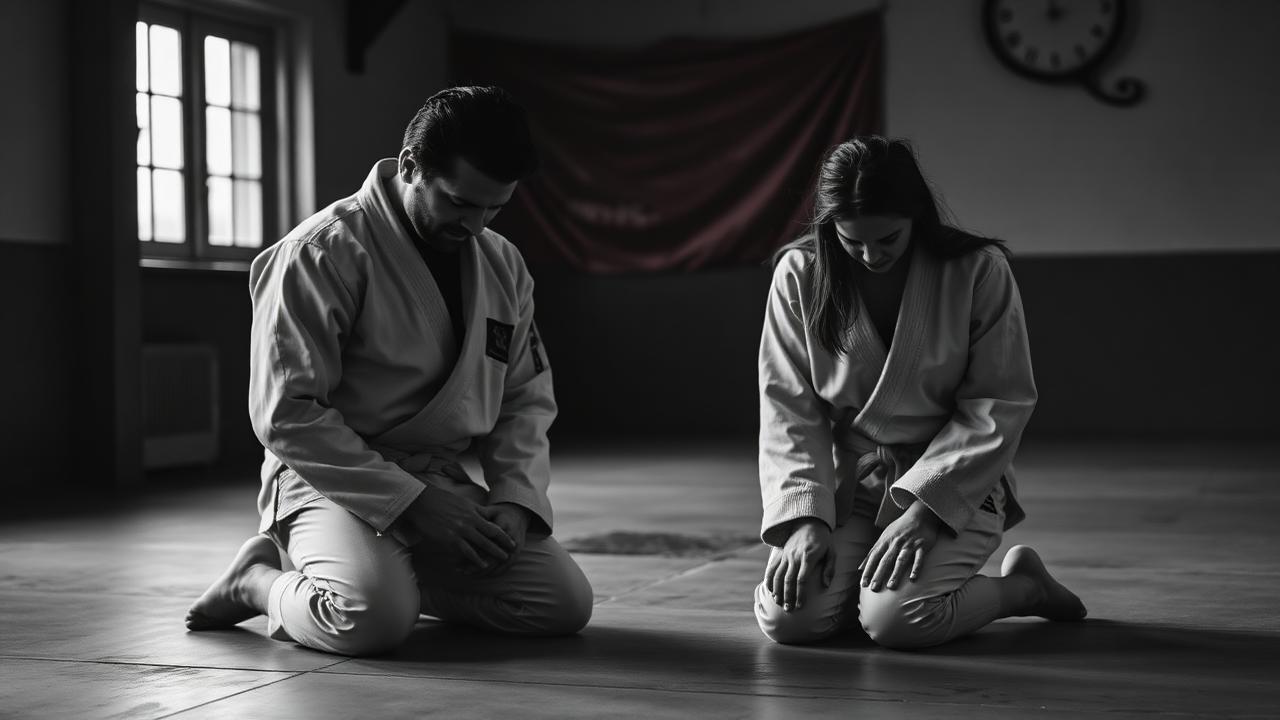
Most adults who want to start BJJ never actually walk into the gym. Not because they are weak, but because life is loud. Careers, kids, mortgages, old injuries, and the quiet voice that whispers you are too late. You are not too late. You are exactly on time for the version of training that is going to matter most to you.
You Are Not Behind — You Are Starting From Real Life
You are not a college athlete with three free hours a day. You have a job, a family, bills, stress, limited recovery, and a body that has lived a real life. That is not a disadvantage. That is the context that makes this journey meaningful.
Every adult on the mats is fighting the same hidden opponents: time, energy, and ego. Showing up at all is already a win most people never claim.
You Do Not Need To Be Naturally Athletic
BJJ rewards leverage, timing, patience, and problem-solving. Athleticism helps, but it is not the foundation. The most consistent person in the room beats the most talented person in the room over a five-year window. Always.
If you can learn, breathe, and keep showing up, you can do this.
The First Few Months Are Supposed To Feel Awkward
Expect this:
- Not knowing where to put your hands
- Getting tired in 30 seconds
- Forgetting techniques the moment class ends
- Feeling pressure and a small wave of panic
- Being humbled by smaller, older, or lighter people
- Quietly asking yourself if you belong
The struggle is not proof you do not belong. The struggle is the process.
For Parents, This Is Bigger Than A Hobby
For moms and dads, BJJ is rarely about becoming dangerous. It is about becoming capable.
- Capable of protecting your family if you ever truly needed to
- Capable of modeling courage so your kids see what showing up looks like
- Capable of doing something hard that belongs to you, outside of work and parenting
- Capable of rebuilding the version of yourself you set aside years ago
Your kids do not need a perfect parent. They need one who keeps trying.
FlowLogic Grappling
Your Training Needs a System
If you are only relying on memory after class, you are leaving progress on the mat. FlowLogic Grappling helps you track what you learned, what worked, what failed, and what to focus on next.
Start Tracking in FlowLogicBJJ Builds Quiet Confidence
Real confidence is not loud. It is the quiet evidence you collect every week:
- You showed up nervous
- You survived a hard round
- You learned one escape
- You stayed calmer under pressure than last month
That is the kind of confidence that follows you home.
How To Survive Your First 30 Days
- Train 2 times per week if that is what life allows
- Focus on survival, breathing, and escapes — not submissions
- Do not compare yourself to anyone with more mat time
- Ask one question after every class
- Track what you learned
- Celebrate small wins
- Prioritize sleep and recovery
- Keep showing up
What To Track As A Beginner
After every class, write down:
- Date trained
- What technique was taught
- What position felt hardest
- What caused panic
- What worked
- What did not work
- One thing to improve next class
- Energy and effort level (1–10)
A simple notebook is enough. The Ironman Grappling BJJ Logbook is built for this exact habit so you do not have to invent the system yourself.
Key Takeaway
You are not too old, too busy, too out of shape, or too inexperienced to start. You are exactly the kind of person BJJ was built for — if you are willing to keep showing up.
Apply This On The Mats
Ask yourself, honestly:
1. Why do I want to start BJJ?
2. What fear is holding me back?
3. What kind of example do I want to set for my family?
4. What is one small goal for my first 30 days?
5. What will I track after each class?
Stop Guessing. Start Building Your Game.
Use FlowLogic Grappling to track your BJJ, wrestling, no-gi, gi, mindset, and competition progress in one place.
Start Tracking Your BJJ Progress